Practice your English in context. Learn. Read. Listen. Pronounce. Play games...

Wednesday, 12 November 2014

WRITING (FORMAL & INFORMAL) LETTERS.


This post is devoted to learning how to write a letter and distinguishing between formal (writen to institutions, companies or for official purposes) and informal ones (written to family and friends). Now most informal letters have been changed for informal emails (see previous post). Above you can see how they are different in layout. Study below all the other differences:


A practical exercise:

Link to more practice:
- WRITING FORMAL LETTERS. (British Council)
- FORMAL EMAILS. (Oxford University Press)
- FORMAL EXPRESSIONS. (Flo-Joe)
- FORMAL X INFORMAL LANGUAGE (Flo-Joe)

Tuesday, 11 November 2014

ENGLISH VERB TENSES IN CONCEPTUAL GRAPHICS


WHY DO MANY BRITISH PEOPLE WEAR A POPPY ON THEIR LAPEL IN NOVEMBER? IT'S REMEMBRANCE DAY (Updated November 2014)

Tower of London, November 2014

A poppy on a lapel

Remembrance Day – also known as Poppy Day, Armistice Day (the event it commemorates) or Veterans Day – is a day to commemorate the sacrifices of members of the armed forces and of civilians in times of war, specifically since the First World War. It is observed on 11 November to recall the end of World War I on that date in 1918. (Major hostilities of World War I were formally ended at the 11th hour of the 11th day of the 11th month of 1918 with the German signing of the Armistice.) The day was specifically dedicated by King George V, on 7 November 1919, to the observance of members of the armed forces who were killed during war.
The poppy's significance to Remembrance Day is a result of Canadian military physician John McCrae's poem In Flanders Fields. The poppy emblem was chosen because of the poppies that bloomed across some of the worst battlefields of Flanders in World War I, their red colour an appropriate symbol for the bloodshed of trench warfare. An American YMCA Overseas War Secretaries employee, Moina Michael, was inspired to make 25 silk poppies based on McCrae's poem, which she distributed to attendees of the YMCA Overseas War Secretaries' Conference. She then made an effort to have the poppy adopted as a national symbol of remembrance, and succeeded in having the National American Legion Conference adopt it two years later. At this conference, a Frenchwoman, Anna E. Guérin, was inspired to introduce the widely used artificial poppies given out today. In 1921 she sent her poppy sellers to England, where they were adopted as well as by veterans' groups in Canada, Australia and New Zealand. Some people choose to wear white poppies, which emphasises a desire for peaceful alternatives to military action.
The
Royal Canadian Legion suggests that poppies be worn on the left lapel, or as close to the heart as possible. In England, Wales, and Northern Ireland the poppies are paper representatives of the flat Earl Haig variety with a leaf, mounted on a plastic stem. Wearers require a separate pin to attach the poppy to their clothing. In Scotland the poppies are curled at the petals with no leaf.
Tower of London, November 2014: 888.246 poppies


Video: IN FLANDERS FIELDS poem:


Link to more info @ EnglishWithATwist:

Why Do We Celebrate Poppy Day?

Monday, 10 November 2014

WRITING INFORMAL EMAILS


Here are examples of informal emails. Read them and take a look at the advice to each of them.
Summary:

Sunday, 9 November 2014

25th ANNIVERSARY OF THE FALL OF THE WALL

Two photos showing the difference in 25 years: upper photo 1989, lower one, the same place Brandemburg Gate, Berlin in 2014
25 years later, the 15km long siluette of the wall throughout Berlin is marked with thousands of illuminated balloons which have been lit this weekend to commemorate it.

Today marks another 25th anniversary celebration yet. It's also 25 years of the fall of the wall, the one which divided Berlin and Germany in two parts, and even the whole world. The wall built in 1961 was also known under the name of the Iron Curtain separating Europe from the communist Eastern side.

Links to more information:

Saturday, 8 November 2014

GALICIA: THE SEVENTH CELTIC NATION


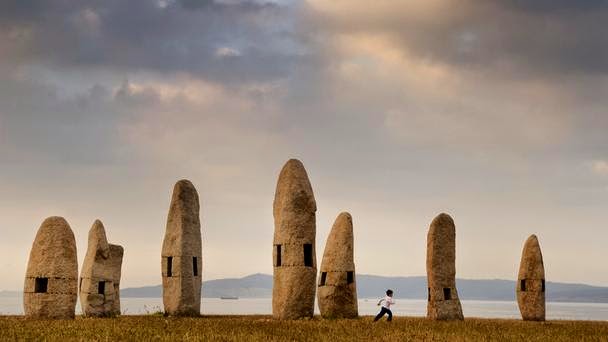
While Scotland and Ireland are most commonly associated with the Celtic people, the roots of the culture are spread throughout Europe. More than a millennium ago, a Celtic tribe known as the Gallaeci settled in an area north of the Douro River. The region became modern day Galicia, which is in northwest Spain and is today considered the seventh of the original Celtic nations, along with Eire (Ireland), Kernow (Cornwall), Mannin (Isle of Mann), Breizh (Brittany), Alba (Scotland) and Cymru (Wales).
The evidence is everywhere, from the Galician language – which contains a significant amount of words of Celtic origin and is spoken by more than three million people – to the pagan festivals and rituals that continue to flourish in the region. The pallozas, or round stone huts (pictured), date back 2,500 years and are believed to be of Celtic origin.

Thanks to Jim Richardson from National Geographic Creative, if you want to know more, continue reading in BBC travel.


Friday, 7 November 2014

"RAFAEL DIESTE" PLURILINGUAL SECONDARY SCHOOL 25th ANNIVERSARY COMMEMORATION


Yesterday evening the "Rafael Dieste" Plurilingual Secondary School 25th anniversary commemoration was held at the nearby "Andrés Gaos" Auditorium of the Conservatorio Superior de Musica of A Coruña. Attending were our headmaster Mr. L. Fernando Gomez Sal, the Rector of the University of A Coruña Mr Xose Luis Armesto Barbeito and our Education inspector Mr. Lisardo López Varela, as you can see in the photo.

Galician version of this post @ ArquivosDoTrasno.

Thursday, 6 November 2014

"RAFAEL DIESTE" PLURILINGUAL SECONDARY SCHOOL: 25th ANNIVERSARY


It's the anniversary of the "RAFAEL DIESTE" Plurilingual Secondary School. The 25th anniversary of our school is to be celebrated. Today, November 6th at 18:30 pm, a commemorative ceremony will be held at the nearby "Andrés Gaos" Auditorium of the Conservatorio Superior de Música of A Coruña.

Programme:
- Opening speech by the School Director.
- Speech by school teacher Miguel Mato Fondo, "Rafael Dieste: a name for an educationl project".
Musical performance by students from our school.
- Lecture by the Rector of the University of A Coruña. Xosé Luís Armesto Barbeito, "The Secondary School, the University and the right to be educated".
- Musical finale: La Importancia (1933), poem for voice and piano.
Lyrics: Rafael Dieste.
Soprano: Susana de Lorenzo
Music: Miguel Brotóns
Piano: Beatriz López-Suevos

We're also premiering today our new logo designed by Isabel López Viñuela, our drawing teacher. 


Wednesday, 5 November 2014

Saturday, 1 November 2014

25th ANNIVERSARY "RAFAEL DIESTE" PLURILINGUAL SECONDARY SCHOOL: INTERVIEWING OUR HEADMASTER


About to start the week when we'll be celebrating the 25th anniversary of the opening of the "RAFAEL DIESTE" Plurilingual Secondary School, our headmaster L. Fernando Gómez Sal has given an interview to Ivan Aguiar for the local newspaper "La Opinion de A Coruña". You can either read it here via this link or translated into English below.

Luis Fernando Gómez Rafael Dieste Secondary School's headmaster

'The problem we have with our students is motivation'

To mark the occasion of the 25th anniversary of the opening of Rafael Dieste Secondary School, the headmaster, Luis Fernando Gómez, explains which are the challenges the teachers must face to keep up with the quality of our teaching. He also comments on the experience of being a plurilingual school. 
-Which are the aims for this school in the next few years?
- The school sets to continue with the same educational path for the future as during the latest years improving the education our students receive. Assisting both the students who have problems and those who don't want to go onto university studies, offering also quality education.
- What's the exprerience of adapting the school to a plurilingual educational system been like?
-Our school offers some subjects in English for all students. Specifically our school teaches Physical Education, Technology and Music in English. Students don't have great problems. They have to adapt in the lower levels. Soon they get used to it and it's a complement to their training which we think is very useful.
- How do you see the educational scene at the moment?
-The situation of education is a reflection of our current society, which is going through difficult moments, but I'd emphasise that thanks to the teachers' effort, we achieve a respectable and appropriate educational level.
- Has the level of students  lowered compared to other years?
- I don't think student's levels have worsened- I haven't got a pessimistic view of education. We have to take into account that we have a very varied group of students, which have very different interests and perspectives. On the one hand we assist students who only want to get the school graduation and others who want to go onto university. So I don't think the level of education has lowered in recent years, but we do have the difficulty of managing students who have different interests and aims for their future.
-Is it difficult to maintain the level when there are students who want to give up studying and others want to carry on?
-The problem we have with our students is motivation. In our classrooms we find students who are completely unmotivated together with others who are completely aware that they are at school to prepare themselves for their future. It's difficult to get these unmotivated students to be part of the school and get a suitable training. We try to make them part of it every day.
- What's going to happen at the commemorative event on November 6th?
- We're going to bring together people who have belonged to our school throughout these 25 years. Former teachers, students and some educational authorities and managing staff from other schools. Current and former members of parent associations will also attend.
Galician version of this post @ ArquivosDoTrasno.

Friday, 31 October 2014

BRITISH SLANG (1)


Slang are words that are not considered part of the standard vocabulary of a language and that are used very informally in speech especially by a particular group of people.
Here's a list of some common British slang expressions.

All of these words and phrases are defined in Anglotopia’s Dictionary of British English, which has over 1,000 words and phrases.
CHUFFED TO BITS – To be thrilled by something.
KNACKERED – Tired
CHEERS! – Thank you.
BRILLIANT! – Something wonderful or outstanding (an American would say Awesome!).
TICKETY BOO – Going smoothly, doing all right.
JOLLY GOOD – An expression used to describe happiness and joy
CHEERIO – Goodbye
RIGHTO – Yes or saying someone is right.
TALLY HO! – A military term often used to mean charge! Also used in hunting.
CREAM CRACKERED – To be very tired.
LOVELY JUBBLY – Excellent. As popularised by ‘Only Fools And Horses’
GOBSMACKED – When someone is left speechless after witnessing or being told something incredible.
BOB’S YOUR UNCLE – It’s a catch phrase dating back to 1887, when, in a blatant case of favoritism, British Prime Minister Robert Cecil (a.k.a. Lord Salisbury) decided to appoint his nephew Arthur Balfour to the prestigious and sensitive post of Chief Secretary for Ireland. So “Bob’s your uncle” is another way of saying “your success is guaranteed.”
SHIP SHAPE AND BRISTOL FASHION – Everything is in order. Sorted.
GIVE YOU A BELL – Give you a call.
LOST THE PLOT – Gone mad – ceased to act rationally.
A BIT OF A KERFUFFLE – A spot of bother/trouble.
KNICKERS IN A TWIST – To get unnecessarily upset over a trivial matter.
THE BEE’S KNEES – Something that is excellent and of high quality.
KNOW YOUR ONIONS – To be knowledgable on a particular subject.
OFF TO BEDFORDSHIRE – To go to bed.
DUDE / GUY / BROTHER / BUDDY- Friend.
BIG SLEEP / END OF LINE - Die
CHICKEN - Coward
JUNKIE / POTHEAD - Drugaddict
DODGY - Risky, triky, hazardous.
SHAG - To have sexual intercourse.
SNOG - To kiss and cuddle
PISSED - Drunk, intoxicated
TAKING THE PISS - Laugh at someone, be mocked
BOLLOCKS - Testicles, rubbish, nonsense, vulgar.

Thursday, 16 October 2014

JOBS & EMPLOYMENT (Vocabulary practice)

More vocabulary and practice related to jobs and employment.
Link to jobs & occupations vocabulary.


Wednesday, 15 October 2014

WHAT DO YOU DO? JOBS & OCCUPATIONS


Here's a post devoted to the vocabulary of jobs and different occupations.

What do you do? / What's your job?
I'm / (s)he's a...

Practice:
Where do each of them usually work in?
[office / plane / school / hospital / clinic / newspaper, TV channel / pub, restaurant / court / garage / classroom, school, university / building site / police station / bus, taxi / street / shop...]
What requirements are needed for each job? 
[working hours / physical strength / university degree / professional training / attractive appearance / good people skills / knowledge of languages...]
Which personality characteristics are needed?
[courageous / patient / calm / creative / adventurous / friendly / organized / outgoing...]

Link to the MAP OF GRADUATE CAREERS.


Video about JOBS:

This site is used with a non-profit educational purpose only. If you find content (photo/video...) you think shouldn't have been included here, please tell me so I can delete it. Thanks.

Blog labels / Tabs

'-ED' '-ING' 'S 1ºBac 1ºESO 2ºBac 2ºESO 3ºESO 4ºESO 8M A(N) ABAU AS Abbreviations Ability Accents Adjectives Ads Adverbs Advicing Agreeing Agreement Alphabet Altkönigschule Animals Animation Anniversaries Antonyms Apologizing Apostrophe AprilFool Art Articles Aux.Verbs BBC BE BY Basics Behaviour Biography Blog Body BonfireNight BrE/AmE Bullying Business CINEMA COVID CV CW Carnival Causative Cause Celebration Christmas Cities CitySongs ClassActivity ClassrooManagement ClassroomLanguage Clothes Collocations Colours Commitment Communicating Comparatives Competition Compounds Conditionals Confusing Connectors ContinuousTenses Contractions Contrast ConversationAssist Cooking Coruña Cosmos Countability Crime Culture Curiosities DO Date Day Deduction Demonstratives Descriptions Design Determiners Directions ENOUGH EW19 Emails Emphasis EngDepActivities EngEvolution EnglishWeek Environment Exams Exclamations F&AEssay FalseFriends Family Feelings Films Food Formal FrequencyAdvs Fun Functions Furniture Future GET GO Galicia Game Gastronomy Gender Genitive Geography Graduation Grammar Greetings Greta HAD BETTER HAVE Halloween HandwritingHistory Harassment Health Help tips Heritage History Home Homecoming Homographs Homophones Horoscopes Hull HumanRights Hygiene ICT Idioms Imperative Infinitive Info Informal Instruments Interjections Internet Introducing Inviting Ireland IrregularVerbs Jobs Karaoke Kron19 Kron23 Kron25 LIKE LanguageLearning Leisure Letterwriting Listening Literature Lockdown London LoveActually MAKE Maps Maths Measures Media Memories MindMap Mistakes ModalVerbs Money Music MusicProject Narrative Nationalities NaturalDisasters Nature Negative News Numbers Nürn10/11 Nürn12 Nürn14 Nürn18 Obit Obligation Offering Onomatopoeias Opinions PASSWORD Paddington Palindrome Passive Past Peace Penpals PerfectTenses Permission Personality Philosophy Phoning Photography PhrasalVerbs Pioneers Plurals Poetry Politeness Politics Poll Possessive Possibility Practice Preference Prefix Prepositions Present PresentPerfect Press Prohibition Projects Promising Pronouns Pronunciation Punctuation Purpose QTags Quantifiers QuestionMaking Questionnaire Quiz Qwords RD25Years RafDieste Reading Reason Recipes Relatives RepVbs ReportedSpeech Requesting Retirement Routines Royals Scholarships SchoolActivities Science Scotland SeaSongs Secuencing Senses Shipwrecks Shopping Slang Sleep Slide Smileys SocialMedia Speaking Spelling Sport SportProject St.Patrick Storytelling Strategies Stress StudentExchange StudentPics StudentRecipes Suffix Suffragette Suggestions Symbols Synonyms THE THE SEA TV Teaching Technology Terrorism TheHoliday Theatre Thnksgvg-BlckFrdy Time Tools Traditions Translation Travel Tribute UK USA UsedTo Valentine Vehicles VerbTenses Verbs Videos Vocabulary Wales Wearing Weather Wellbeing Willstätter Wishing Women WordOrder Wordbuilding Writing vs

PHONEMIC CHART

PHONEMIC CHART
Practice pronunciation