Practice your English in context. Learn. Read. Listen. Pronounce. Play games...
Showing posts with label Galicia. Show all posts

Friday, 15 March 2024

GALICIAN IS ALSO SPOKEN HERE


 "GALICIAN IS ALSO SPOKEN HERE" ("AQUÍ TAMEN SE FALA GALEGO") is a campaign that started off at our school one year ago to promote and show that Galician is also spoken in cities, breaking the prejudices that intend to give a distorted image. This campaign, which spread throughout the shops and businesses of our neighbourhood and city centre, in the immediate environment of each of our students, has now expanded all over Galicia with more than 200 schools taking part, so you can find these poscards or posters in many places around Galicia. The campaign is also promoting Galician music and culture on social media networks. 
Everything about this campaign can be checked out on their website aquitamensefala.com: the videos with Viggo Mortensen, James Rhodes, Tanxugueiras, María Vázquez, football clubs... and many more, who all speak Galician and are proud to show off. The campaign has also reached Germany with our German exchange students.
The image on this post shows the many languages spoken by students of the Rafael Dieste, which proves the diverse linguistic heritage our school holds. It's a fortune to have such a live culture and to drink water from so many fountains. Proud of our diversity!


Wednesday, 29 June 2016

THE LOVELY CITY WE LIVE IN. (HAVE A GOOD SUMMER!!!)


Closing down the blog for the summer holiday, here's a video reminding us of the great city we live in, so even if we stay around, there's lots to enjoy. Have a great summer holiday wherever!

Saturday, 8 November 2014

GALICIA: THE SEVENTH CELTIC NATION


While Scotland and Ireland are most commonly associated with the Celtic people, the roots of the culture are spread throughout Europe. More than a millennium ago, a Celtic tribe known as the Gallaeci settled in an area north of the Douro River. The region became modern day Galicia, which is in northwest Spain and is today considered the seventh of the original Celtic nations, along with Eire (Ireland), Kernow (Cornwall), Mannin (Isle of Mann), Breizh (Brittany), Alba (Scotland) and Cymru (Wales).
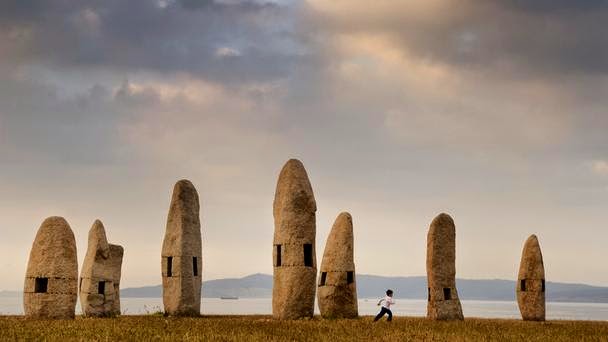
The evidence is everywhere, from the Galician language – which contains a significant amount of words of Celtic origin and is spoken by more than three million people – to the pagan festivals and rituals that continue to flourish in the region. The pallozas, or round stone huts (pictured), date back 2,500 years and are believed to be of Celtic origin.

Thanks to Jim Richardson from National Geographic Creative, if you want to know more, continue reading in BBC travel.


Friday, 19 September 2014

GALICIA BIDS TO BECOME THE NEW SCOTLAND FOR BRITAIN


More than 1300 from Galicia in north-west Spain have written to David Cameron offering to stand in for Scotland.
A petition on change.org sets out their position clearly.
The Spaniards reckon they've got the attitude, culture and climate to make them an ideal substitute if Scotland quits the union.
Their petition, addressed to Mr Cameron, says: "We Galicians are aware of the fact that Scotland may become independent in 2014 and that this issue is worrying you. You needn’t think of a solution to this challenge because we have found an innovative proposal that you won’t be able to refuse:
We propose you to accept Galiza as an integral part of the United Kingdom.
This may come as a surprise to you but Galiza is also a Celtic nation in the northwest of Spain. With us on board you won’t miss the following:
Scottish pipes: we have our own.
Celtic of Glasgow: we have Celta Vigo
An amazing landscape, we have that too
Scottish clans, we have plenty of them (caciques are included)
Our people like their drinks as Scots do
We have a vibrant cultural and music scene
In Galiza it also rains a lot
We have a strong identity like Scottish people do.
We are also an Atlantic country
Flags of both countries have similar colours

We also have some stingy people.
Santiago of Compostela is our Edinburgh
With Galicians as part of the UK, you will gain the following:
Hard-working people
Galician people's accent (in English) is easier to understand than the Scottish accent
If you leave us alone, we won’t bother you
Lovely food and drinks (e.g. cozido instead of haggies, licor cafe instead of whisky, etc.)
We speak the most spoken Roman languages of the world: Portuguese (Galician) and Spanish (Galician). We are able to communicate with both Brazil and Mexico using our two languages.
Milder weather than in Scotland
We share a similar sense of humour with British people (“retranca” is the Galician irony)
British economy will improve with our fishing industry, textile (e.g. Zara), cultural tourism (The Way of St James), best beach of the world (Praia de Rodas, Illas Cies ,Vigo).
Our seafood is worldwide famous (mussels, oysters, lobsters, etc.)
Link to the original article @ The Mirror

Monday, 23 June 2014

THE TRADITION OF SAINT JOHN'S NIGHT


Tonight we're celebrating a "Noite de San Xoán" (Saint John's Night), a tradition that deepens its roots in traditions previous to the arrival of Christianity and that is celebrated in many places throughout Europe and America, though it's specially settled in Spain, Portugal, Denmark, Norway, Sweden, Latvia, Lithuania and Estonia.

What is celebrated?
In its pagan origin the summer solstice was celebrated, that is, the longest day of the year at the Northern hemisphere. To commemorate this night bonfires were lit to purify and give strength to the sun, as from here days would start to be shorter, until we reached the second solstice of the year, winter's.

Why is it celebrated today if the summer solstice was on the 21st?
The answer is because, as in many other popular festivities of pagan origin, after the arrival of Christianity, traditions were integrated to the Christian calendar and the custom of lighting bonfires was connected to the birth of Saint John, who according to the Bible was born on June 24th, the nearest date to the summer solstice of the Northern hemisphere.

Have a great time and enjoy!

Galician version @ ArquivosDoTrasno.

Saint John's night 2014, Riazor-Orzán beaches, A Coruña:

Thursday, 25 July 2013

Breaking news summer update: TRAIN CRASH IN ANGROIS (SANTIAGO DE COMPOSTELA)


Listen to the information of Angrois-Santiago's train crash in English on these videos:

Sunday, 28 April 2013

"RAFAEL DIESTE" IV CULTURAL WEEK: GALICIAN HERITAGE, THE SLIDE

"You say: Galicia is really small.
I say to you: Galicia is a world in itself"
(Vicente Risco)


This week, from Monday 29th April till Friday 3rd May, we'll be celebrating our IV Cultural Week at IES "Rafael Dieste". This activity organized by the school's library together with the different departments and the students of our school is devoted this year to Galician artistic and natural heritage.

This year once again, there will be exhibitions of 
- Galician typical costumes, 
- typical Galician pottery,
- student's works on our different monuments, 
- photos of the different school-trips to visit them.
Performances of:
- traditional music,
- choirs, 
- traditional dance, 
- theatre plays 
and the projection of the film "The Way" devoted to St. James' pilgrimage route.

As you already know, the English Department has contributed with an exhibition based on posters from the local newspaper with short descriptions in English and Galician, which has been on display at our school since the German student exchange arrived a month ago. Now it's shown again as part of the Cultural Week. The different places shown in the exhibition have already been posted in this blog, together with a quiz.

Enjoy the week and take care of our heritage!


Friday, 15 March 2013

GALICIAN HERITAGE: THE QUIZ


Once you've read the descriptions of the selected Galician heritage sites on a previous post in this blog, see here. You can have a try with this quiz to check if you've learnt things. 

QUESTIONS ABOUT GALICIAN HERITAGE

1- Complete the chart with the correct monument name:
Year
Monument
Award
1980

Nature Reserve
1985

World Heritage
1987

European Cultural Route
1993

World Heritage
1993

UNESCO Biosphere Reserve
1997

Natural Park
2000

World Heritage
2002

Natural Park
2007

Best beach in the world, “The Guardian”
2009

World Heritage
2- What's special about the Tower of Hercules?

3- What was the Lugo Roman Wall built for?

4- Why has Santiago de Compostela become one of the most important pilgrimage sites in Europe?

5- How many different alternatives has the St James' Way got?

6- When is Holy Year?

7- Where is the Caaveiro Monastery? When was it founded?

8- What is said about going to St Andrew of Teixido dead or alive?

9- How many ruins of houses are kept at the Baroña Castro?

10- Which sea washes the Cathedrals Beach?

11- On what border is the Serra do Xurés natural park?

12- At the mouth of which “ria” are the Cies Islands?

13- What's a “palloza”?

14- How long is the Carnota horreo?

Sunday, 10 March 2013

GALICIAN HERITAGE

As we receive the German students from the Wilsttater Gymnasium in Nuremberg once again, we have prepared an exhibition of our most important monumental and natural heritage, so that they can see how beautiful our country is. This exhibition is the preview of this year's cultural week. Here in the blog we show the photos, too.

TOWER OF HERCULES. (Roman Lighthouse)


The TORRE DE HÉRCULES (the Hercules Tower) is a Roman tower and lighthouse located in the peninsula of the city of A CORUÑA. It has the priviledge of being the only lighthouse of Roman origin still in use in the world.
It's a World Heritage site since 2009.

LUGO ROMAN WALLS. ( Roman Fortification)

The Muralla Romana de Lugo (the Roman Walls of Lugo) is a fortification from the Roman Empire time located around the city of Lugo (Lucus Augusti) and it's one of the finest examples which is still preserved in the world.
The wall's eliptical perimeter of about 2 kilometres long and a height between 8 and 12 metres, was one of the largest fortifications of its time. There's a walkway over the wall. It was built to defend the city, an important business and communication centre in the North of the penisnula, from local tribesmen and Germanic invaders.
It's World Heritage since the year 2000.

SAINT JAMES OF COMPOSTELA CATHEDRAL.

The CATEDRAL DE SANTIAGO DE COMPOSTELA (Santiago de Compostela Cathedral) is a Catholic temple located in the city of Santiago de Compostela (A Coruña). It's the Apostle's Saint James' burialplace, what made it become one of the most important pilgrimage sites in Europe since the Middle Ages on to present days.
It's a World Heritage site since 1985.

ST. JAMES' WAY. (Pilgrimage Routes)

O CAMIÑO DE SANTIAGO (Saint James' Way) is the group of access routes for pilgrims to Santiago de Compostela, since the discovery of the remains of the Apostle Saint James. The Way has different alternatives of varied use depending on the times. Its great heyday was in the Middle Ages.
The French Way entering from France through Roncesvalles, following the plateau up to the entrance to Galicia by O Cebreiro. The Aragonian Way entering from France through Somport. The North Way along the Cantabric coastline entering Galicia by Ribadeo. The Portuguese Way from Portugal in the South. The Silver Way for those who come from the South of the peninsula. The English Way from Ferrol and Coruña, where the ships from the British Isles arrived. And the Fisterra-Muxía Way from the pilgrims who continued from Santiago to land's end.
Whenever Saint James' day (25th July) falls on Sunday it's Holy Year.
It's World Heritage since 1993 and the first European Cultural Route by the European Council since 1987.

CAAVEIRO MONASTERY &
AS FRAGAS DO EUME. (Natural Park)

The Fragas do Eume (the Eume Forest) is located in the province of A Coruña alongside the banks of the river Eume which stretches through the municipalities of As Pontes, A Capela, Monfero, Cabanas and Pontedeume. Fraga is the Galician word for natural woodland and it's the best example of the Atlantic temperate rainforest in Europe and Natural Park since 1997.
Within the limits of this park is the Monastery of Saint John of Caaveiro, founded in the 10th century.

SAINT ANDREW OF TEIXIDO SANCTUARY.

The sanctuary of San Andrés de Teixido (Saint Andrew of Teixido) is located on the cliffs of the Capelada Serra by the ocean in the municipality of Cedeira (A Coruña).
It's a pilgrimage site since the Iron Age, during the Castro culture. It's popularly said that “vai de morto quen non foi de vivo” (“who didn't go alive, goes when dead”).

BAROÑA CASTRO. (Archeological Site)

The Baroña Castro is located in the parish of Baroña, municipality of Porto do Son (A Coruña).
The archeological settlement, placed on a peninsula, was inhabited between the I century before Christ to the I century after Christ. It consists of 20 circular or oval stone houses within a double defensive wall. It's an example of Galician Castro culture.

THE BEACH OF THE CATHEDRALS (RIBADEO).

The Praia de Augas Santas (Beach of the Holy Waters), touristically known as a Praia das Catedrais (the Cathedrals Beach) is located in the parish of Devesa in the municipality of Ribadeo (Lugo).
It's 1500mts long on the Cantabric coast. Its name comes from the formation of its cliffs, caves and natural arches.

SERRA DO XURÉS (Natural Park)

The Serra do Xures Natural Park extends over six Galician and five Portuguese councils. Situated in the South of the province of Ourense on the Portuguese border. It's a granite mountain area and within its limits there are the lowest elevation glacier cirques in the Iberian peninsula. 1993 UNESCO Biosphere Reserve.

THE CIES ISLANDS. (Natural Park)

The Cíes Islands are an archipelago off the coast of Pontevedra in Galicia (Spain), in the mouth of the Ría de Vigo. They were declared a Nature Reserve in 1980 and are included in the Atlantic Islands of Galicia National Park (Parque Nacional Marítimo-Terrestre das Illas Atlánticas de Galicia) created in 2002.
In February 2007 the British newspaper The Guardian chose the beach of Rodas, Spain on the island of Monteagudo, as "the best beach in the world."

O PIORNEDO. (Traditional mountain cottages)

Piornedo is a small village in the Ancares mountains in Spain. It is part of the municipality of Cervantes, in the area of Os Ancares, in the province of Lugo, Galicia. The village is located at a height of approximately 1,300 metres.
Piornedo is famous for its museum, a preserved palloza or traditional house, that shows how people lived in this remote region until comparatively recently.

CARNOTA HORREO. (Typical Galician granary)

An hórreo is a typical granary from the northwest of the Iberian Peninsula (mainly Galicia and Asturias), built in wood or stone, raised from the ground by pillars (esteos in Galician) ending in flat staddle stones (vira-ratos in Galician) to avoid the access of rodents. Ventilation is allowed by the slits in its walls. The longest hórreo in Galicia is located in Carnota, A Coruña and is 35 m long.

Wednesday, 31 October 2012

SAMAIN:THE GALICIAN HALLOWEEN


It's Halloween, once again. This year we're going to talk about it from a Galician point of view: the Samain.
Samain is the most important Celtic origin festival of the pagan period, which dominated Europe until its conversion to Christianism. It's celebrated on the night of October 31st and November 1st as the end of the harvest season and it was considered as the Celtic New Year and the beginning of the dark season. Etimologically, the word Samain means the end of summer.
The person who rediscovered this tradition in Galicia was a primary school teacher from Cedeira (A Coruña), Rafael López Loureiro. He realised that this tradition still existed all over Galicia less than thirty years ago. He also discovered its suvival in areas of Caceres, Zamora and Leon, where Galician language and traditions are alive.
He also studied the relationship between the pumpkin tradition and the death festivities similar to British traditions. He even discovered some peculiar things, like in Quiroga (Lugo), where the emptied pumpkins are left to dry and kept to be used as masks at Carnival (Entroido).
Nowadays, Samain is still celebrated year after year in many cities and villages in Galicia, such as A Coruña, Ferrol, Cedeira... The village of Ribadavia (Ourense) celebrates the "noite meiga" (the witches' night), when the village gets full of ghosts, witches, vampires and Ribadavia's castle is the perfect setting for this terrifying landscape.
Happy Samain! Happy Halloween!

More posts about Halloween @ ClickOnEnglish here.
Galician version of this post @ ArquivosDoTrasno here.

This site is used with a non-profit educational purpose only. If you find content (photo/video...) you think shouldn't have been included here, please tell me so I can delete it. Thanks.

Blog labels / Tabs

'-ED' '-ING' 'S 1ºBac 1ºESO 2ºBac 2ºESO 3ºESO 4ºESO 8M 9/11 A(N) ABAU AS Abbreviations Ability Accents Adjectives Ads Adverbs Advicing Agreeing Agreement Alphabet Altkönigschule Animals Animation Anniversaries Antonyms Apologizing Apostrophe AprilFool Art Articles Aux.Verbs BBC BE BY Basics Behaviour Biography Blog Body BonfireNight BrE/AmE Bullying Business CINEMA COVID CV CW Carnival Causative Cause Celebration Christmas Cities CitySongs ClassActivity ClassrooManagement ClassroomLanguage Clothes Collocations Colours Commitment Communicating Comparatives Competition Compounds Conditionals Confusing Connectors ContinuousTenses Contractions Contrast ConversationAssist Cooking Coruña Cosmos Countability Crime Culture Curiosities DO Date Day Deduction Demonstratives Descriptions Design Determiners Directions ENOUGH EW19 Easter Emails Emphasis EngDepActivities EngEvolution EnglishWeek Environment Exams Exclamations F&AEssay FalseFriends Family Feelings Films Flashback Food Football Formal FrequencyAdvs Fun Functions Furniture Future GET GO Galicia Game Gastronomy Gender Genitive Geography Graduation Grammar Greetings Greta HAD BETTER HAVE Halloween HandwritingHistory Harassment Health Help tips Heritage History Home Homecoming Homographs Homophones Horoscopes Hull HumanRights Hygiene ICT Idioms Imperative Infinitive Info Informal Instruments Interjections Internet Introducing Inviting Ireland IrregularVerbs Jobs Karaoke Kron19 Kron23 Kron25 LIKE LanguageLearning Leisure Letterwriting Listening Literature Lockdown London LoveActually MAKE Maps Maths Measures Media Memories MindMap Mistakes ModalVerbs Money Multiculturalism Music MusicProject Narrative Nationalities NaturalDisasters Nature Negative News Numbers Nürn10/11 Nürn12 Nürn14 Nürn18 Obit Obligation Offering Onomatopoeias Opinions PASSWORD Paddington Palindrome Passive Past Peace Penpals PerfectTenses Permission Personality Philosophy Phoning Photography PhrasalVerbs Pioneers Plurals Poetry Politeness Politics Poll Possessive Possibility Practice Preference Prefix Prepositions Present PresentPerfect Press Prohibition Projects Promising Pronouns Pronunciation Punctuation Purpose QTags Quantifiers QuestionMaking Questionnaire Quiz Qwords RD25Years RafDieste Reading Reason Recipes Relatives RepVbs ReportedSpeech Requesting Retirement Routines Royals Scholarships SchoolActivities Science Scotland SeaSongs Secuencing Senses Shipwrecks Shopping Slang Sleep Slide Smileys SocialMedia Speaking Spelling Sport SportProject St.Patrick Storytelling Strategies Stress StudentExchange StudentPics StudentRecipes Suffix Suffragette Suggestions Sweets-cakes Symbols Synonyms THE THE SEA TV Teaching Technology Terrorism TheHoliday Theatre Thnksgvg-BlckFrdy Time Tools Traditions Translation Travel Tribute UK USA UsedTo Valentine Vehicles VerbTenses Verbs Videos Vocabulary Wales Wearing Weather Wellbeing Willstätter Wishing Women WordOrder Wordbuilding Writing vs €vision

PHONEMIC CHART

PHONEMIC CHART
Practice pronunciation